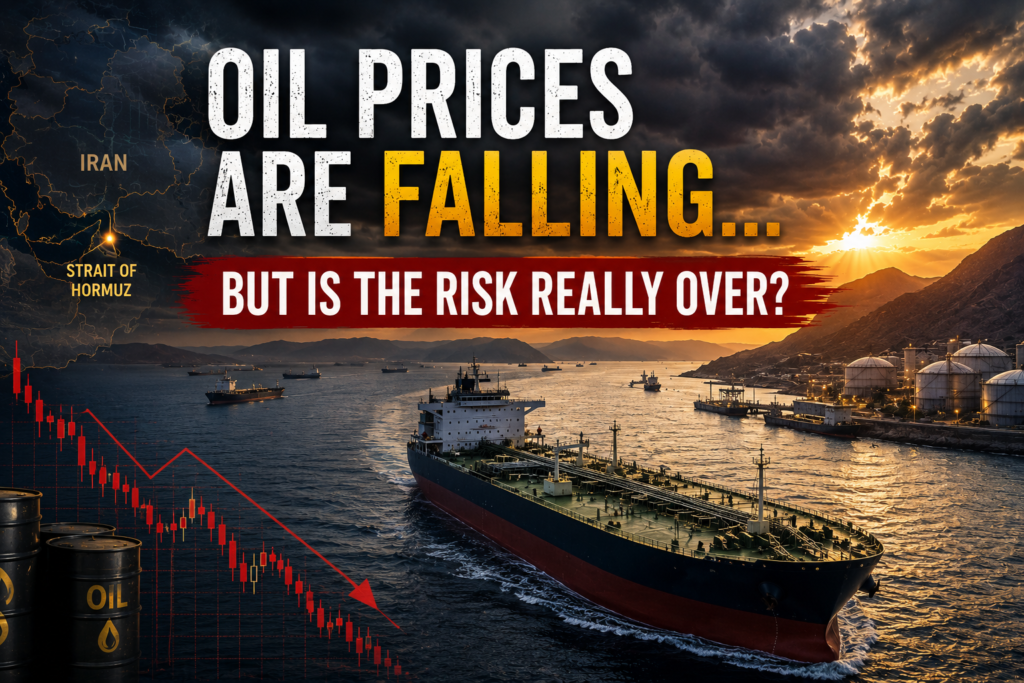
A few weeks ago, the conversation around oil looked very different.
Analysts were openly discussing the possibility of crude climbing above $100 a barrel. Airlines were reviewing fuel-hedging strategies, shipping companies were preparing for higher operating costs, and governments worried that another spike in energy prices could reignite inflation just as many economies were beginning to regain their footing.
Today, that urgency has faded.
Oil prices have slipped back toward pre-crisis levels, equity markets have recovered some confidence, and the headlines are no longer dominated by fears of an immediate supply shock.
It’s tempting to see that as a simple story: tensions eased, prices fell, crisis over.
Markets rarely work that neatly.
The recent decline reflects a change in expectations more than a dramatic change in physical supply. The immediate threat has diminished, but many of the structural risks that pushed prices higher are still there. They’re simply receiving less attention.
That distinction matters because oil has a habit of reminding markets how quickly confidence can change.
The Road to Lower Prices
The latest move in oil prices began long before diplomacy made headlines.
As tensions involving Iran intensified, attention shifted almost immediately to the Strait of Hormuz. It is a narrow stretch of water, yet around one-fifth of the world’s seaborne oil trade passes through it. Whenever instability reaches that part of the Gulf, traders stop thinking only about production. They start thinking about movement.
Would tankers still sail normally? Would insurers increase premiums? Would buyers struggle to secure cargoes?
Those questions alone were enough to push prices higher.
Energy markets have behaved this way for decades. They rarely wait for supply to disappear before reacting. By the time physical shortages become obvious, prices have usually moved.
This time was no different.
Some tanker operators became more cautious. Marine insurers reassessed risk. Refiners in Asia quietly reviewed delivery schedules, while commodity traders began pricing in the possibility—not the certainty—of disruption.
For most consumers, none of this was visible.
They simply saw oil becoming more expensive.
When diplomatic efforts reduced tensions and both sides signaled they wanted to avoid a broader confrontation, markets adjusted just as quickly. Commercial shipping became more predictable again, insurers grew less defensive, and traders started removing the geopolitical premium that had built up over the previous weeks.
Nothing magical happened.
The outlook simply became less alarming.
Why Prices Fell Faster Than Many Expected
Several developments worked together.
The diplomatic breakthrough mattered, but it wasn’t the whole story.
Markets Stopped Pricing the Worst Case
Oil markets spend much of their time anticipating possibilities rather than responding to confirmed events.
During periods of geopolitical tension, traders ask what could happen if exports are interrupted or shipping lanes become unsafe. If those risks appear to be fading, prices adjust long before additional oil reaches the market.
That pattern has repeated through wars, sanctions, piracy incidents, and shipping disruptions for years.
Veteran commodity traders understand this well. They have seen markets overreact to uncertainty and then quietly unwind those moves once the worst fears fail to materialize.
This episode followed a familiar script.
Confidence Returned Gradually
The physical flow of crude never stopped completely.
Confidence did.
As commercial vessels resumed more regular operations through the Strait of Hormuz, businesses connected to the energy trade slowly relaxed. Freight markets stabilized, insurers became more willing to provide coverage at lower premiums, and refiners found it easier to plan purchases.
Interestingly, some of the earliest signs of improving conditions didn’t come from oil producers at all. They came from shipping and insurance markets, where participants often adjust their risk assessments before broader financial markets catch up.
It’s an easy detail to overlook, but it says a great deal about how modern energy markets function.
Demand Was Never Especially Strong
There’s another reason prices softened.
Demand hasn’t been as robust as many forecasts suggested earlier in the year.
China’s recovery has been uneven. Manufacturing activity across several major economies remains mixed, and businesses have spent the past few years becoming more disciplined about energy consumption after repeated price shocks.
That doesn’t make for dramatic headlines, but it matters.
Oil prices rise most aggressively when strong demand collides with constrained supply. Right now, neither side of that equation looks particularly extreme.
So, Is the Crisis Really Over?
Probably not.
That’s where the recent optimism deserves a little caution.
The diplomatic agreement reduced immediate tensions, but it didn’t resolve the deeper political disputes that created them. Those issues remain largely intact.
History offers plenty of examples of ceasefires, negotiations, and temporary understandings that calmed markets for a while before new incidents revived uncertainty.
Energy traders know this.
They’ve watched similar cycles repeat often enough that confidence is never taken for granted for very long.
One Waterway, Global Consequences
The Strait of Hormuz occupies a surprisingly small place on the map considering the influence it has over the global economy.
Every day, millions of barrels of crude and petroleum products pass through it. That flow supports refineries across Asia, Europe, and beyond.
The effects of disruption spread well outside the oil industry.
Airlines reassess fuel costs months ahead. Manufacturers revisit procurement budgets. Governments monitor inflation risks more closely. Even central banks pay attention because sustained increases in energy prices eventually filter into transportation, food, and consumer goods.
Oil touches far more of the economy than most people realize.
That’s one reason markets react so quickly whenever the Gulf becomes unstable.
The Risks That Haven’t Gone Away
While recent headlines have become more encouraging, the broader region remains fragile.
Tensions involving Yemen, the Red Sea, Lebanon, and regional proxy groups continue to create uncertainty. None currently dominates market sentiment, but they don’t need to.
Sometimes a single event is enough to change expectations.
Markets move far faster than governments.
A diplomatic response may take days to organize. Oil futures can react within minutes to reports of an attack on commercial shipping or an unexpected military escalation.
Not because supply has already been disrupted.
Because traders begin asking whether it soon could be.
Winners and Losers
Lower oil prices provide clear relief for importing economies.
India benefits from a smaller import bill, reduced inflationary pressure, and lower costs for businesses that depend heavily on transportation and logistics.
Europe, still recovering from years of elevated energy costs, also gains as manufacturers face less pressure from fuel expenses.
Japan and China, both major importers, stand to benefit in similar ways, although the impact ultimately depends on broader economic conditions.
Exporters see the situation differently.
Countries such as Russia, Saudi Arabia, and Iran rely heavily on energy revenues. Lower prices reduce government income and can complicate fiscal planning, particularly for nations funding ambitious spending programs.
Smaller exporters with limited financial reserves often feel that pressure even sooner.
What Should Investors Watch?
Today’s price matters less than tomorrow’s signals.
Shipping activity through the Strait of Hormuz remains one of the most important indicators.
So do negotiations involving Iran.
OPEC production decisions could reshape the balance between supply and demand, while China’s industrial activity will continue influencing consumption expectations.
One area that deserves more attention is the insurance market.
Insurance premiums rarely dominate financial headlines, yet they often provide one of the earliest indications of whether businesses believe regional risks are increasing or fading. It’s a small piece of the puzzle, but experienced energy analysts watch it closely.
The Bigger Picture
Oil is often described as a commodity, but today’s market behaves more like an interconnected network.
Production still matters, of course. So does demand.
But shipping routes, insurance costs, refinery buying patterns, financial positioning, geopolitics, and investor sentiment increasingly influence prices alongside physical supply.
That wasn’t always true to the same degree.
Global supply chains became remarkably efficient over the past few decades. The trade-off is that they also became more interconnected. A disruption in one strategic waterway can ripple through freight markets, manufacturing costs, inflation expectations, and financial markets within hours.
The recent fall in oil prices reflects that reality.
The market became less worried.
It didn’t become risk-free.
Perhaps that’s the larger lesson. Oil markets are no longer driven solely by what is happening today. They are driven by what millions of participants—from traders and insurers to refiners and policymakers—believe might happen next.
That doesn’t guarantee another price spike is around the corner. It does suggest that periods of calm should be viewed with a little humility.
The immediate crisis may have eased, but the conditions that make oil markets so sensitive haven’t really changed. If anything, they’ve become more deeply woven into the way the global economy now works. The next big move in crude prices may begin long before the first barrel is lost.