Most people filling their cars with fuel this week will never think about the Strait of Hormuz.
Yet decisions being made around this narrow waterway could eventually influence what they pay at the pump, how much airlines charge for tickets, and even how central banks think about inflation.
That may sound like an overstatement.
It isn’t.
The Strait of Hormuz is one of those places that rarely enters public conversation until tensions rise. Then suddenly governments, investors, shipping companies, and energy traders around the world are paying attention to the same stretch of water.
The current crisis has triggered exactly that reaction.
The concern is not simply about a conflict in the Middle East. It is about what happens when uncertainty develops around one of the world’s most important trade corridors. Oil markets react. Shipping costs move higher. Businesses begin reviewing plans that seemed perfectly reasonable a few weeks earlier.
That is why events around Hormuz attract attention far beyond the region itself.
Whether this becomes a genuine global economic shock remains uncertain. The truth is that even experts disagree on how severe the consequences could become. The challenge is not measuring today’s disruption. It is estimating tomorrow’s response.
And markets spend a lot of time trying to do exactly that.
Why This Waterway Matters
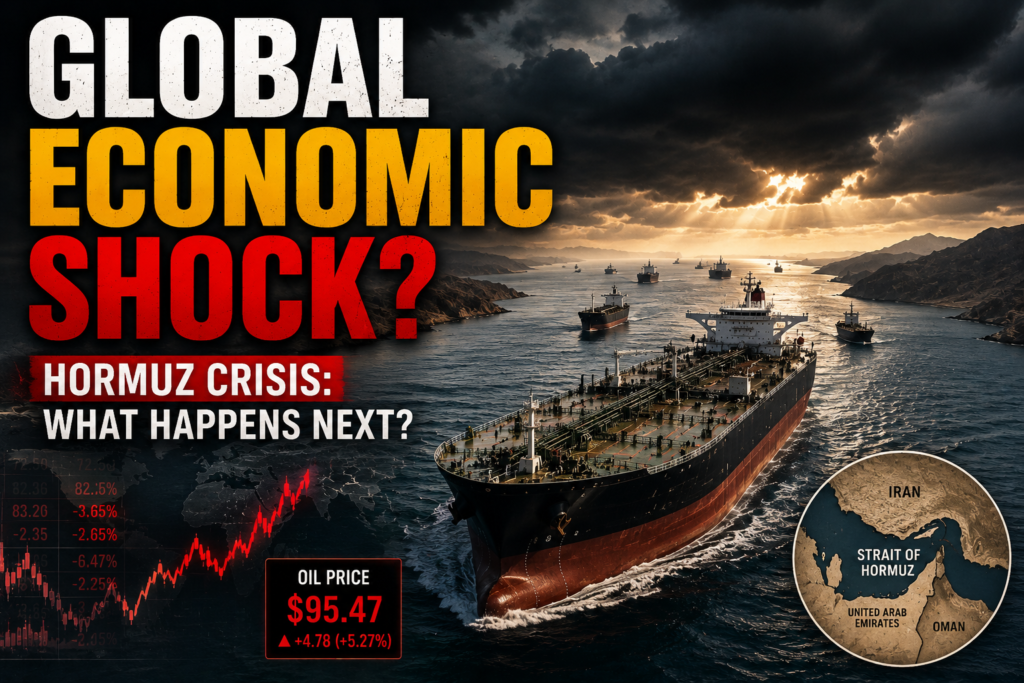
The Strait of Hormuz is a narrow maritime passage connecting the Persian Gulf to the Arabian Sea and the wider Indian Ocean.
For countries including Saudi Arabia, the United Arab Emirates, Kuwait, Iraq, and Qatar, it serves as a critical export route. A substantial share of their oil and natural gas exports must pass through this corridor before reaching customers around the world.
Energy analysts have long described Hormuz as one of the most important chokepoints in the global economy.
The reason becomes obvious when looking at the numbers. Roughly one-fifth of global oil consumption moves through the strait. Qatar’s liquefied natural gas exports rely heavily on it as well.
Most of the time, that dependence remains invisible.
Until it doesn’t.
A disruption affecting a single shipping corridor in the Gulf can influence energy prices in Asia, manufacturing costs in Europe, and inflation expectations in North America.
Geography still matters more than many people assume.
Why Timing Matters
The current tensions are unfolding at a particularly sensitive moment.
Economic growth has slowed in many major economies. Governments continue carrying elevated debt burdens. Central banks have spent years fighting inflation and are only beginning to see signs that price pressures are easing.
Meanwhile, businesses are still adjusting supply chains after a series of disruptions that began during the pandemic and continued through subsequent geopolitical conflicts.
Economic shocks rarely arrive when conditions are ideal.
A major energy disruption today would land in a world that is already carrying a fair amount of economic baggage.
Not a crisis.
But not a particularly comfortable position either.
We’ve Seen Similar Fears Before
Concerns about energy disruptions are not new.
The 1973 oil crisis reshaped economic policy across much of the world. The Gulf War triggered fears about supply security. More recently, the attacks on Saudi oil facilities in 2019 reminded markets how vulnerable critical energy infrastructure can be.
What makes the current situation different is not simply the amount of oil moving through the region.
It is the degree of interconnectedness.
Global supply chains stretch across continents. Manufacturing networks depend on components arriving on time. Financial markets process information instantly.
A disruption today can travel through the global economy much faster than it could decades ago.
Economists often point out that energy shocks rarely stay confined to energy markets.
History suggests they rarely do.
Markets React Before Disruptions Happen
One of the easiest mistakes to make is assuming that markets wait for events to occur before responding.
They don’t.
Shipping companies do not need a waterway to close before becoming nervous. Rising insurance costs and the possibility of delays are often enough to change decisions.
Energy traders think similarly.
If the probability of disruption increases, prices move. Investors adjust portfolios. Companies begin evaluating contingency plans.
Sometimes the economic effects start before any physical disruption has actually occurred.
That may sound irrational.
In practice, it is often how risk management works.
What People Often Get Wrong About Hormuz
Many discussions focus on a dramatic scenario: the complete closure of the Strait of Hormuz.
That is understandable. It is also somewhat misleading.
Markets rarely wait for the worst-case outcome.
Insurance premiums can rise before a single tanker changes course. Traders can become more cautious before exports decline. Businesses can revise budgets before energy prices spike significantly.
The debate is often framed around whether the strait closes.
In reality, the economic effects frequently begin much earlier.
That is what investors tend to watch most closely.
Oil, Inflation, and the Risk That Isn’t Always Obvious
Oil is usually the first market to react when tensions escalate around Hormuz.
A significant share of global energy exports passes through the waterway, so concerns about future supply quickly influence prices.
The effects spread well beyond fuel stations.
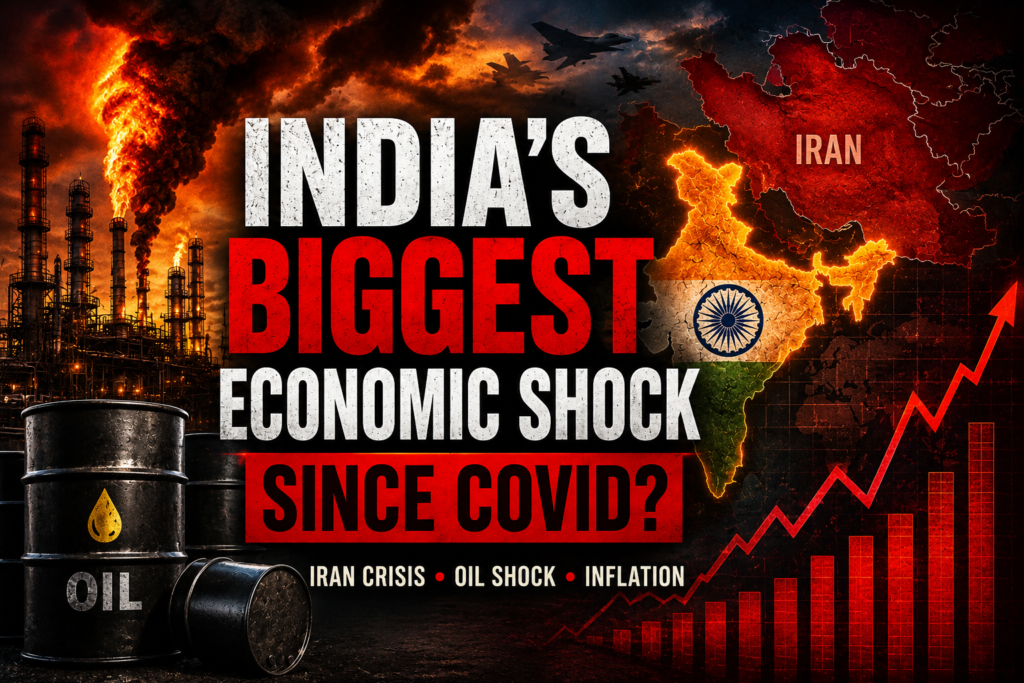
A factory in India importing chemicals faces higher transportation costs. Airlines spend more on jet fuel. Logistics companies pay more to move goods across borders. Supermarkets eventually face higher costs from suppliers.
Different businesses. Same underlying issue.
Consider a mid-sized manufacturer in western India that relies on imported industrial chemicals. The company may never ship a single product through the Middle East. Yet if energy costs rise, transportation becomes more expensive, suppliers raise prices, and profit margins narrow. Hiring plans may be postponed. Equipment purchases may be delayed.
The connection is indirect.
But it is real.
Inflation has a habit of returning through channels policymakers thought were becoming less important.
That is why central banks watch energy markets so closely.
The larger risk, however, may not be oil itself.
Uncertainty can become economically expensive.
Companies delay investment decisions. Expansion plans are pushed back. Consumers become more cautious about major purchases. Financial markets become more volatile.
Not overnight.
But gradually.
What Economists, Energy Analysts, and Central Banks Watch
Economists tend to focus on how energy prices filter through the broader economy. Their concern is not only fuel costs but also how those costs affect consumer spending, business investment, and inflation expectations.
Energy analysts often pay closest attention to shipping activity, export volumes, insurance premiums, and spare production capacity among major oil producers. These indicators can reveal stress long before official economic data does.
Central banks view the situation through a different lens. They watch whether higher energy prices begin influencing broader inflation trends. A temporary spike is one thing. A sustained increase that spreads across multiple sectors is another.
Their job becomes considerably harder if the second scenario starts to develop.
What Could It Mean for India?
India deserves particular attention because it remains one of the world’s largest energy importers.
The country’s growing role in manufacturing, technology, and global services has increased its economic influence. At the same time, energy dependence remains one of its most significant external vulnerabilities.
If higher oil prices persist, fuel costs become more difficult to manage. Import bills increase. Pressure on the rupee can intensify.
The consequences are rarely limited to financial markets.
Businesses reconsider spending plans. Companies become more selective about hiring. Consumers often pull back on discretionary purchases when transportation and household costs rise.
The duration of the disruption matters enormously.
A short-lived price spike is manageable.
Months of elevated energy costs create a different conversation.
Not Everyone Sees the Same Risks
Some analysts argue that markets may be overstating the danger.
Strategic petroleum reserves exist. Alternative export routes have expanded. Renewable energy capacity has grown. Many governments and businesses have spent years preparing for scenarios that once would have caught them off guard.
There is an interesting contradiction here.
Ironically, the fact that markets understand the risks around Hormuz may reduce the likelihood of a severe shock. Businesses, governments, and traders have spent years preparing for disruptions that once would have caused far greater damage.
Others remain cautious.
Their argument is straightforward: preparation helps, but it does not eliminate dependence.
Both views have merit.
The Paths Ahead
The most likely outcome is not a full-scale crisis.
Tensions remain elevated. Markets price in additional risk. Energy costs stay somewhat higher than normal. Economic growth slows modestly in some regions, but the global economy adapts.
A more disruptive path would involve prolonged instability and persistently high energy prices. Businesses become more cautious. Investment decisions are delayed. Consumers face higher costs for longer.
The least likely outcome remains the most severe.
A major disruption to shipping through the Strait of Hormuz would create a substantial energy shock, increase market volatility, and revive recession fears across multiple economies.
Forecasting which path ultimately unfolds is difficult.
Which brings us to an important limitation.
The Limits of Forecasting
It is important to recognize the limits of any forecast involving geopolitical events.
Market reactions can change rapidly as new information emerges. Diplomatic breakthroughs sometimes arrive unexpectedly. Escalations can occur just as quickly.
Analysts can estimate risks.
They cannot eliminate uncertainty.
That is why most serious forecasts focus on probabilities rather than predictions.
The Bigger Geopolitical Lesson
The most important lesson from Hormuz extends beyond Hormuz itself.
The world economy has become remarkably efficient. Goods move across continents. Supply chains connect dozens of countries. Energy flows through global networks that barely existed a generation ago.
But efficiency has a trade-off.
Concentration.
A surprising amount of global commerce depends on a relatively small number of ports, shipping lanes, canals, and chokepoints.
The Strait of Hormuz is one example.
The Red Sea is another.
The Taiwan Strait. The Suez Canal. The Panama Canal.
Different locations. Similar vulnerability.
What makes these places important is not their size. It is the amount of economic activity flowing through them.
Many discussions about globalization focus on technology, finance, and trade agreements.
Less attention is given to geography.
Yet geography continues to shape outcomes in ways that are easy to overlook when everything is functioning normally.
When it isn’t, those dependencies become much harder to ignore.
What Markets Will Be Watching Next
In the coming weeks, investors, policymakers, and businesses are likely to focus on several indicators:
- Shipping traffic through the Strait of Hormuz
- Commercial shipping insurance premiums
- Global oil and LNG prices
- Diplomatic negotiations involving regional powers
- Military activity near major shipping routes
- Responses from large energy-importing economies
These signals often reveal more than headlines alone.
Final Thoughts
Most drivers stopping for fuel this week will probably never think about the Strait of Hormuz.
Yet the price they pay, the cost of airline tickets, the decisions made in corporate boardrooms, and the plans being discussed by central banks may depend partly on what happens there in the weeks ahead.
The strait is only a narrow waterway on the map.
Its influence reaches much further.