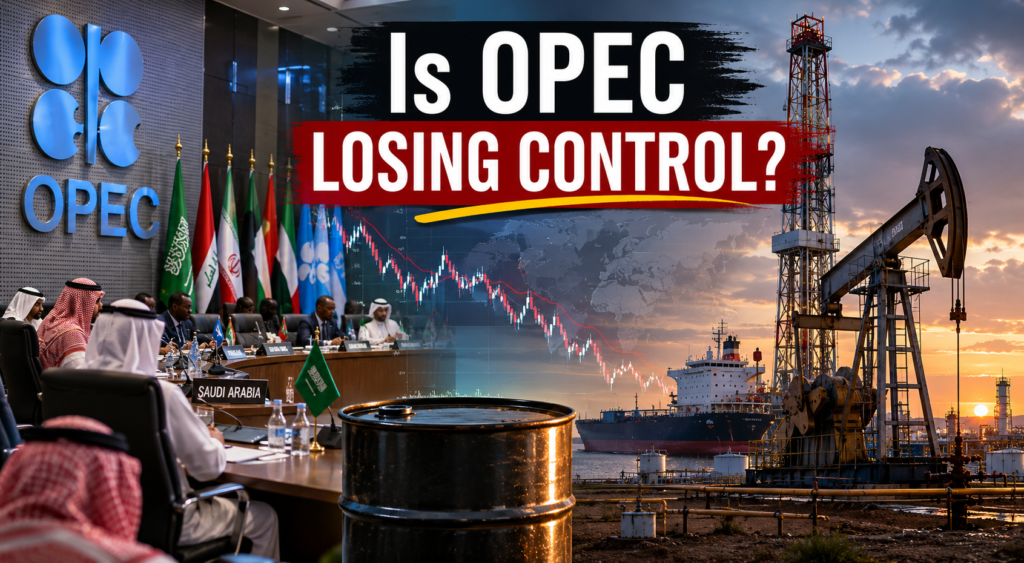
When oil ministers gather in Vienna, traders around the world still pay attention.
For decades, a decision emerging from an OPEC meeting could send shockwaves through global markets. Governments watched closely. Investors recalculated forecasts. Consumers eventually felt the impact in the form of higher fuel prices, more expensive transportation, and rising inflation.
There was a reason for that.
For much of the modern oil era, OPEC sat at the center of the market. The organization controlled a large share of global production, held enormous reserves, and, perhaps most importantly, had the ability to coordinate supply among major exporters.
If OPEC reduced production, prices often rose. If it increased production, markets adjusted accordingly.
The relationship was never perfect, but it was predictable enough that policymakers, airlines, manufacturers, and commodity traders all paid attention to the same meetings and the same announcements.
Today, that certainty has faded.
OPEC still matters. It remains one of the most influential organizations in energy markets. Yet the market it helped shape has become more crowded, more fragmented, and far more difficult to steer.
The debate is no longer about whether OPEC remains powerful.
The more interesting question is whether power and control are still the same thing.
From Dominance to Competition
OPEC was founded in 1960 by a group of oil-producing nations seeking greater control over their resources and a stronger position in negotiations with international oil companies.
Over the following decades, the organization became one of the most important forces in the global economy.
Its influence was built on a simple idea: supply.
Because OPEC members collectively controlled vast reserves and significant production capacity, coordinated decisions could have enormous consequences. For years, there were relatively few producers capable of responding quickly when OPEC adjusted output.
That gave the organization leverage.
The 1973 oil crisis demonstrated just how powerful that leverage could be. Governments suddenly discovered that energy security was not merely an economic issue. It was a geopolitical one. Long lines formed at fuel stations in several countries. Policymakers scrambled for solutions. Entire industries began rethinking their exposure to oil shocks.
That lesson has lingered for more than half a century.
Yet the conditions that supported OPEC’s dominance gradually began to change.
Not dramatically at first.
Then all at once.
The Market Became Harder to Control
One of the assumptions behind OPEC’s influence was that production cuts would tighten supply and push prices higher.
For a long time, that logic worked.
Then came the shale revolution.
Advances in drilling and hydraulic fracturing unlocked vast quantities of oil trapped in American shale formations. Fields in Texas and North Dakota that once attracted limited attention became central to the global energy conversation.
Looking back, the shale boom may have changed the market more profoundly than many OPEC members anticipated.
For decades, OPEC’s challenge was deciding how much oil to produce.
Suddenly, it also had to consider how competitors might respond.
The irony is difficult to miss. OPEC’s ability to support prices could also weaken its long-term influence. Every successful production cut created stronger incentives for rival producers to expand output.
In earlier eras, reducing supply often meant tightening the market.
Now it can mean creating opportunities for someone else.
The 2014 oil price collapse exposed just how dramatically the competitive landscape had changed. The old relationship between OPEC decisions and market outcomes was no longer as straightforward as many assumed.
The market had become more responsive.
And more crowded.
One subtle shift often receives less attention than it deserves. OPEC once spent much of its energy managing supply. Increasingly, it has had to manage expectations. Those are not the same thing.
At the same time, internal tensions became harder to ignore.
The organization functions best when members share common priorities. In reality, national interests rarely line up perfectly.
Some governments need higher prices to support public spending. Others prefer maximizing production volumes. Saudi Arabia has often pushed for discipline, while other members have periodically sought greater flexibility.
Every member benefits from collective action.
Every member also has reasons to prioritize its own interests.
Markets understand that tension, even when officials try not to advertise it.
When Politics Moves Markets Faster Than Oil
Oil has always been tied to geopolitics.
What has changed is the speed at which geopolitical events influence prices.
Conflicts in the Middle East, sanctions on major producers, attacks on energy infrastructure, and disruptions to shipping routes can move markets within hours.
Sometimes actual supply is not the immediate issue.
Perceived risk is.
When a tanker encounters trouble near a major shipping corridor or tensions rise around the Strait of Hormuz, traders often react before the physical consequences become clear.
In some cases, the fear of disruption becomes more powerful than the disruption itself.
That observation may sound counterintuitive, but markets frequently trade expectations before they trade reality.
A headline can move prices long before supply figures change.
This creates a market environment very different from the one OPEC dominated decades ago. Production decisions still matter, but they increasingly compete with forces outside the organization’s control.
There is another irony here.
The more interconnected global energy markets become, the harder they are for any single actor to dominate.
Connectivity creates influence.
It also creates vulnerability.
A Demand Story That No Longer Looks Certain
For much of the past several decades, analysts could make a relatively safe assumption: global oil demand would continue rising.
Economic growth, industrialization, urbanization, and rising living standards supported that view.
Today, the picture is less straightforward.
China remains one of the world’s most important energy consumers. Yet its economy is evolving, and growth no longer looks as predictable as it once did.
The question now is not whether China matters.
It is whether Chinese demand can continue expanding at the pace markets became accustomed to during the country’s rapid-growth years.
That distinction matters.
Oil markets often respond not to whether demand is growing, but to whether demand is growing fast enough to justify expectations.
The difference between those two ideas can move billions of dollars.
Meanwhile, governments are investing heavily in renewable energy, electric vehicles, battery technology, and energy-efficiency measures.
Walk through an auto show today and the contrast is difficult to miss. Many manufacturers are investing in a future where oil remains important but no longer occupies the same dominant position it once did.
None of this means oil is disappearing.
The world still consumes vast quantities of crude every day.
Yet one of the more overlooked realities of the energy transition is that uncertainty itself can shape behavior. Companies invest differently when they are unsure what demand will look like ten or fifteen years from now.
The COVID-19 demand collapse offered a reminder of how quickly assumptions can break. For a brief moment in 2020, the world faced the extraordinary sight of oil prices turning negative in parts of the market.
Events like that leave a lasting impression.
So Is OPEC Losing Control?
The answer depends on how control is defined.
If control means the ability to influence markets, OPEC clearly retains substantial power.
Few organizations can collectively remove or add millions of barrels per day through coordinated action. Saudi Arabia’s spare production capacity remains one of the most important tools in the oil market.
That capacity matters for a simple reason.
In energy markets, flexibility often becomes most valuable when uncertainty is highest.
Yet influence and dominance are not the same thing.
That distinction sits at the heart of today’s debate.
One of the assumptions surrounding OPEC’s future is that more competition automatically means less influence.
The evidence points in two directions at once.
More producers have entered the market. More variables affect prices. More geopolitical actors shape outcomes.
Yet spare capacity has arguably become more valuable, not less valuable, in a fragmented market.
The ability to respond quickly remains rare.
And rarity creates influence.
OPEC’s position has changed.
Its importance has not disappeared.
What This Means for India and the World
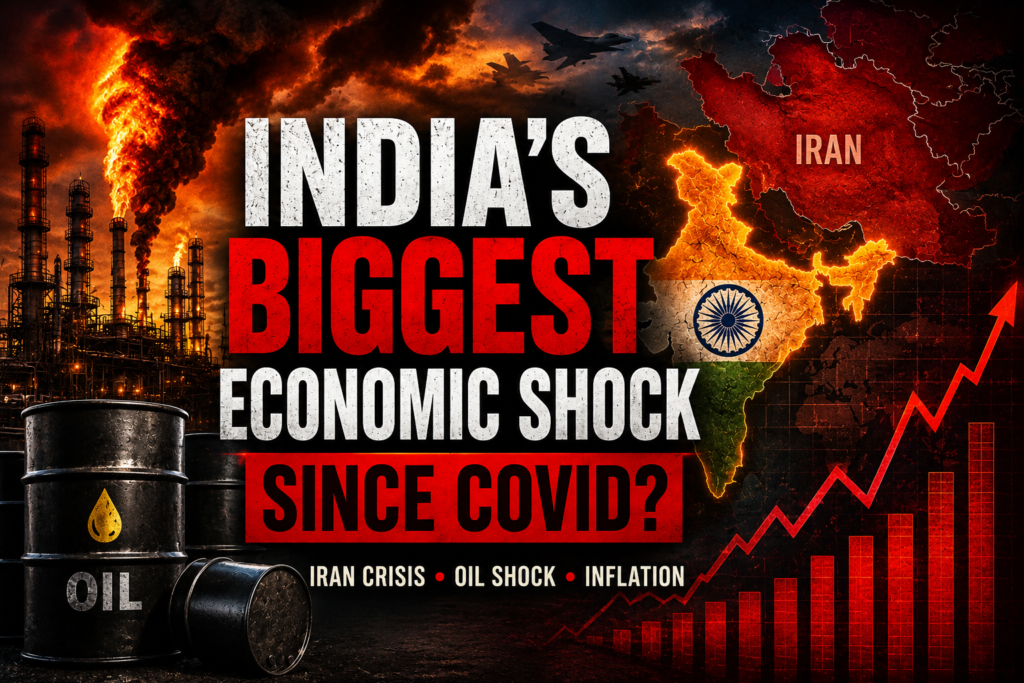
For countries that import large quantities of oil, these shifts are more than an academic debate.
India provides a clear example.
As one of the world’s largest oil importers, India remains highly exposed to oil-price fluctuations. Higher crude prices affect transportation costs, inflation, government finances, and household budgets.
Consumers notice it at fuel stations.
Businesses notice it in freight bills, logistics contracts, and operating expenses.
The effects spread through the economy in ways that are often easy to overlook.
A slightly higher shipping cost can eventually affect the price of food, consumer goods, and industrial materials.
Oil’s influence is rarely confined to oil.
Similar pressures exist across many developing economies where higher energy costs can strain public finances and increase imported inflation.
Europe faces a different challenge.
Following recent supply disruptions, policymakers are attempting to balance affordability, energy security, and long-term climate goals simultaneously.
That balancing act is becoming increasingly complicated.
Meanwhile, China remains central to the broader demand story. Small changes in Chinese consumption patterns can influence investment decisions and market sentiment far beyond its borders.
The market may be more fragmented than it once was.
It is also more interconnected than ever.
The Real Question Facing the Oil Market
The future of oil is unlikely to be determined by any single institution, country, or decision.
Too many forces are now pulling in different directions.
Shale producers respond to prices.
Governments pursue energy transitions.
Geopolitical tensions reshape trade routes.
Investors weigh both near-term demand and long-term decarbonization trends.
And OPEC continues trying to balance a market that has become substantially more complex than the one it dominated decades ago.
That complexity is the real story.
Not the decline of OPEC.
Not the rise of shale.
Not the energy transition alone.
The story is that the modern oil market no longer revolves around a single center of gravity.
Power has become more distributed.
Influence has become more contested.
Control has become harder to sustain.
Which brings us back to the original question.
Is OPEC losing control of the global oil market?
Perhaps.
But there is a deeper possibility worth considering.
The market itself may have evolved beyond the kind of control that once seemed possible.
OPEC remains powerful.
Yet increasingly, it faces the same challenge confronting investors, governments, and energy companies everywhere: interpreting a market shaped by forces that no single actor fully commands.
Markets once waited for OPEC to tell them where oil prices might go.
Increasingly, OPEC is trying to read the same uncertainty everyone else is.