Security summits often generate bold headlines, carefully worded declarations, and a brief burst of political attention before the news cycle moves on.
The latest NATO summit may prove different.
Viewed in isolation, many of its announcements seem familiar: higher defense spending, continued support for Ukraine, stronger military cooperation, and investment in emerging technologies. None of those ideas is entirely new. Taken together, however, they point to something more significant.
Europe is beginning to organize itself around the expectation that strategic instability may persist for years rather than fade with the next diplomatic breakthrough.
That is a meaningful shift.
For much of the post-Cold War period, many European governments treated large-scale interstate conflict as increasingly unlikely. Military budgets fell, defense industries consolidated, and economic integration became part of the continent’s security model. The assumption was that prosperity and interdependence would gradually reduce the likelihood of major confrontation.
That assumption has weakened considerably.
The war in Ukraine accelerated the change, but it did not create it on its own. Concerns about cyber attacks, supply-chain vulnerabilities, energy dependence, critical infrastructure, and growing geopolitical competition had already been reshaping strategic thinking. The summit simply made that evolution more visible.
One detail is easy to overlook.
The most important decisions were not necessarily the ones announced from the podium. They were the decisions governments are now expected to implement over the next decade—through budgets, industrial policy, procurement contracts, and military planning. Those tend to receive far less public attention than summit speeches, yet they often have a much longer lifespan.
That is why the summit matters beyond Europe.
Its decisions will influence defense industries, public finances, technology investment, energy policy, diplomatic relationships, and global supply chains. Countries with very different strategic interests—from India and Japan to Gulf states and many governments across the Global South—are watching closely, not because they expect to join NATO, but because they increasingly operate in the same geopolitical environment.
Russia has rejected many of the summit’s conclusions. Ukraine continues seeking stronger long-term guarantees. Investors are paying attention to defense spending. Manufacturers are preparing for larger orders. Energy markets remain sensitive to geopolitical risk.
The summit is best understood not as a single event, but as another marker in a broader transformation that is already underway.
So what exactly was decided, and why does it matter?
What Happened at the Latest NATO Summit?
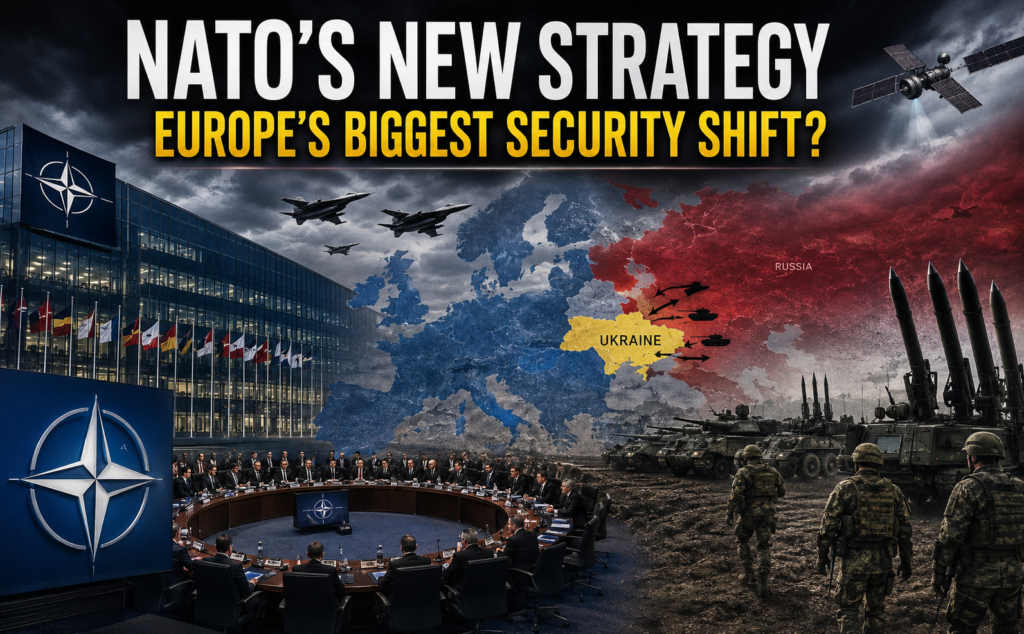
The latest NATO Summit was held in Ankara, Türkiye, on 7–8 July 2026. Leaders from the alliance’s 32 member states met alongside partner countries to assess progress since the 2025 summit in The Hague and agree on the alliance’s next priorities.
The agenda itself contained few surprises.
Collective defense, military investment, support for Ukraine, industrial capacity, emerging technologies, and long-term security preparedness had all featured in previous NATO meetings. What stood out this time was the emphasis on implementation rather than ambition.
That distinction matters.
Large international summits often produce ambitious declarations that take years to translate into practical policy—if they happen at all. This meeting focused less on announcing new ideas and more on accelerating commitments that had already begun to reshape defense planning across Europe.
The core priorities remained clear:
- Strengthening collective defense
- Increasing military investment
- Continuing long-term support for Ukraine
- Expanding defense industrial capacity
- Modernizing military technologies
- Preparing for long-term security threats
Military alliances rarely transform overnight.
Their priorities usually shift gradually while public attention jumps from one crisis to another. Looking back, historians often identify certain summits as turning points only after governments begin implementing what was agreed behind closed doors.
This may become one of those meetings.
The Biggest Decisions Taken at the Summit
Increased Defense Spending
Perhaps the most consequential outcome was NATO’s renewed commitment to significantly higher defense spending.
Member states reaffirmed plans to work toward allocating 5% of GDP to defense and defense-related security investments by 2035, replacing the alliance’s long-standing 2% benchmark with a far more ambitious target. NATO leaders also highlighted the substantial increase in military spending by European members and Canada since last year’s agreement.
Reaching those targets will not be equally straightforward.
Some governments have already accelerated spending. Others face slower economic growth, domestic political resistance, or competing fiscal priorities. Raising defense budgets is often easier to announce than to sustain over a decade.
The bigger question, though, is not whether Europe can spend more.
It is whether Europe can produce more.
For years, much of the continent’s defense industrial base operated on assumptions suited to peacetime. Production lines were optimized for efficiency rather than volume. Inventories were lean. Manufacturing capacity reflected lower demand.
Modern conflict rewards a different model.
The war in Ukraine has exposed just how quickly ammunition stocks can be depleted and how difficult they are to replace. Producing artillery shells, air-defense interceptors, precision-guided missiles, or radar components is not simply a matter of increasing orders. It requires factories, skilled workers, specialized materials, long-term contracts, and supply chains that cannot be expanded overnight.
A missile battery is only as useful as the industrial network capable of replacing the missiles it fires.
That reality is quietly reshaping defense policy across Europe.
In many ways, governments are rebuilding capabilities that had gradually been allowed to shrink after the Cold War. Rebuilding, however, is usually much slower than downsizing. Closing factories takes months. Restoring production can take years.
Defense spending therefore becomes more than a budgetary decision. It evolves into industrial policy, labor policy, technology policy, and, increasingly, economic strategy.
That may prove to be one of the summit’s most lasting consequences.
Continued Support for Ukraine
Ukraine remained at the center of the summit, but the conversation has evolved.
Earlier in the war, NATO discussions largely focused on what assistance could be delivered quickly. The emphasis now is different. The alliance is increasingly thinking in terms of sustainability—how military support can be maintained over years rather than months.
That shift says as much about NATO’s expectations as it does about Ukraine.
Leaders reaffirmed long-term commitments that include military equipment, training, intelligence cooperation, air-defense systems, and continued financial assistance. Much of that support is aimed not only at helping Ukraine defend itself today, but also at ensuring it can continue operating if the conflict becomes even more prolonged.
One reality has become difficult for European governments to ignore.
Modern wars are rarely won by battlefield success alone. They are sustained by logistics, industrial output, political cohesion, and the ability to replace losses over time. Ukraine has demonstrated remarkable resilience, but resilience also depends on a steady flow of equipment, ammunition, maintenance, and funding.
That explains why NATO increasingly frames support for Ukraine as an investment in European security rather than simply assistance to a partner country.
The distinction matters.
If governments view Ukraine primarily as a recipient of aid, public support may gradually weaken as costs rise. If they view Ukraine as part of Europe’s wider security architecture, continued assistance becomes easier to justify politically—even when budgets come under pressure.
Whether that argument continues to resonate with voters over the coming years remains one of the alliance’s biggest political challenges.
NATO’s Message to Russia
The summit once again reaffirmed NATO’s commitment to Article 5—the principle that an attack on one member is considered an attack on all.
On paper, that is not new.
In practice, it carries more weight today than it did only a few years ago because it is increasingly backed by higher defense spending, larger military exercises, expanded deployments, and stronger industrial planning.
Deterrence is ultimately about credibility.
Military alliances do not rely solely on capability; they rely on convincing potential adversaries that those capabilities would actually be used if necessary. That is why governments invest not only in weapons, but also in readiness, logistics, infrastructure, and joint exercises. All of those signal intent.
Russia, unsurprisingly, interprets these developments very differently.
From Moscow’s perspective, NATO’s expanding military presence and continued support for Ukraine reinforce concerns that Western military infrastructure is moving steadily closer to Russian borders.
The disagreement has become increasingly structural rather than temporary.
Neither side expects the other to fundamentally change course in the near future. As a result, defense planning on both sides is beginning to assume a prolonged period of strategic competition rather than a short-lived crisis.
History suggests that such periods often reshape institutions long before they produce diplomatic breakthroughs.
Building New Military Capabilities
The summit devoted considerable attention to technologies that, until recently, sat on the margins of defense planning.
Its priorities included:
- Integrated air and missile defense
- Cybersecurity
- Artificial intelligence
- Drone technologies
- Space security
- Defense manufacturing
- Military logistics
Some of these subjects can appear highly technical. They are anything but.
One of the enduring lessons from the war in Ukraine is that relatively inexpensive systems have repeatedly destroyed equipment worth millions of dollars. Small drones costing a fraction of a tank’s value have changed battlefield tactics, intelligence gathering, and force protection in ways few military planners fully anticipated before 2022.
The economics of warfare are changing alongside the technology.
Cyber capabilities are reshaping conflict in a similar way. A successful cyberattack on an electricity grid, financial network, or communications system can create disruption comparable to conventional military operations—without crossing a physical border.
Artificial intelligence introduces another layer.
Its greatest impact may not come from autonomous weapons alone, but from accelerating intelligence analysis, improving logistics, supporting battlefield decision-making, and helping militaries process vast amounts of information more quickly than human analysts could manage on their own.
People often describe these developments as technological innovation.
Governments increasingly describe them as strategic infrastructure.
That subtle change in language reflects a broader shift in thinking. Chips, software, satellite networks, cloud computing, and secure communications are no longer viewed simply as commercial assets. They are becoming integral to national security planning.
The challenge extends beyond acquiring advanced systems.
Maintaining technological advantage requires engineers, specialized manufacturing, secure supply chains, research institutions, and long-term investment. Those are capabilities that cannot be assembled during a crisis.
Why NATO Made These Decisions
Every major summit reflects more than the headlines it generates.
Behind each announcement sits a strategic assessment about where governments believe future risks are heading. The latest NATO meeting offered perhaps its clearest indication yet that the alliance no longer sees today’s tensions as a temporary disruption to an otherwise stable international order.
Ukraine remains the immediate catalyst.
The conflict forced European governments to reassess assumptions that had shaped defense policy for decades—from ammunition stockpiles and military readiness to industrial resilience and alliance coordination.
But Ukraine is only part of a much wider picture.
NATO has increasingly pointed to cyberattacks, hybrid warfare, disinformation campaigns, sabotage of critical infrastructure, energy security, Arctic competition, and strategic rivalry with China as interconnected challenges rather than separate issues.
That reflects another important shift.
For much of the twentieth century, governments often treated economic policy, industrial policy, technology policy, and national security as distinct fields. Those boundaries are becoming harder to maintain.
Semiconductor manufacturing affects military capability.
Energy infrastructure influences geopolitical leverage.
Critical minerals shape industrial competitiveness.
Commercial satellite networks support military communications.
A future crisis is unlikely to unfold in neat stages. Economic pressure, cyber operations, supply-chain disruption, information warfare, and conventional military force may all emerge simultaneously, reinforcing one another.
Preparing for that kind of environment requires a different mindset than preparing for traditional interstate conflict alone.
Ironically, decades of globalization created many of the interdependencies that governments are now working to reduce or secure. Efficiency became the dominant objective. Resilience has quietly replaced it.
That may be one of the most consequential strategic changes taking place—not only within NATO, but across much of the developed world.
Russia’s Response
Russia reacted sharply to the summit’s conclusions, though the response was largely in line with what observers expected.
Russian officials criticized NATO’s higher defense spending, expanded military cooperation, and continued support for Ukraine, arguing that the alliance is driving Europe toward greater militarization instead of reducing security risks.
That argument has become a consistent feature of Moscow’s foreign policy.
From the Kremlin’s perspective, NATO’s expansion and military buildup reinforce long-standing concerns about Western military infrastructure moving closer to Russia’s borders. Russian leaders continue to present many of the alliance’s decisions as confirmation that their security concerns have been ignored.
Whether other governments accept that interpretation is a separate question.
What matters strategically is that both sides increasingly appear to be making long-term decisions based on assumptions of prolonged rivalry rather than eventual reconciliation. Defense budgets, procurement programs, military exercises, and industrial investments are now being planned over periods measured in years, sometimes decades.
That has consequences beyond diplomacy.
The longer governments assume strategic competition will continue, the more difficult it becomes politically—and institutionally—to reverse course. Factories expand. Supply contracts are signed. Military doctrines evolve. Entire industries begin adapting to sustained demand.
Geopolitical competition has a habit of becoming self-reinforcing.
That does not mean diplomacy disappears. It does mean diplomatic breakthroughs become harder to achieve once national strategies, budgets, and industries have been built around a different set of assumptions.
What These Decisions Mean for Europe
The immediate implications extend well beyond defense ministries.
This summit points to a broader transformation in how European governments think about security, industrial policy, and economic resilience.
Military Readiness
Across Europe, armed forces are preparing for a very different operating environment than the one that shaped military planning for much of the past three decades.
Readiness is no longer measured simply by troop numbers or headline defense budgets.
Governments are investing in logistics, ammunition reserves, maintenance capacity, transport infrastructure, integrated command systems, and large-scale exercises designed to test how quickly allied forces can move across the continent if a crisis emerges.
Those details rarely dominate headlines.
Military planners know they often determine whether sophisticated equipment can actually be deployed when needed.
One lesson from recent conflicts is remarkably practical: owning advanced weapons is only part of the equation. Keeping them operational during an extended conflict is often the harder task.
Defense Industries
Perhaps the most significant change is taking place away from military bases.
It is happening inside factories.
European governments are expanding production of artillery ammunition, missile systems, air-defense interceptors, armored vehicles, radar components, and precision-guided munitions. Some manufacturers are increasing capacity for the first time in decades, encouraged by longer procurement contracts and greater certainty about future demand.
The challenge is not simply funding.
Defense manufacturing depends on highly specialized machinery, skilled engineers, secure supply chains, regulatory approvals, and components sourced from multiple countries. Even relatively small bottlenecks can delay production for months.
Industrial capacity has become a strategic asset in its own right.
For years, many governments assumed they could purchase equipment when necessary. The experience of Ukraine demonstrated that when every country is trying to buy the same systems simultaneously, production capacity—not money—often becomes the real constraint.
That realization is quietly reshaping industrial policy across Europe.
Energy Security
Energy has become part of Europe’s security strategy in a way that would have seemed unusual only a few years ago.
The disruption caused by the war in Ukraine exposed how geopolitical dependence can extend far beyond military affairs.
Reducing reliance on vulnerable energy supplies, expanding LNG infrastructure, investing in renewable generation, strengthening electricity grids, and diversifying import routes have all become elements of broader national security planning.
Energy policy is increasingly being discussed alongside defense policy because, in practice, the two are becoming harder to separate.
A country that cannot secure reliable energy supplies may also struggle to sustain industrial production, military logistics, or economic stability during periods of prolonged tension.
Political Unity
One outcome of the summit received relatively little attention compared with defense spending.
The alliance maintained broad political cohesion despite differing domestic pressures across member states.
That should not be mistaken for complete agreement.
Governments continue to disagree over procurement priorities, spending timelines, and domestic fiscal constraints. Elections will almost certainly reshape those debates in the years ahead.
But NATO has so far managed to preserve consensus on its core strategic direction.
Keeping that consensus intact may ultimately prove as important as acquiring new military capabilities.
History offers plenty of examples of alliances weakened less by external threats than by internal divisions.
Public Spending
Higher defense spending inevitably creates political trade-offs.
Every additional allocation for military investment competes with demands for healthcare, education, housing, transport infrastructure, pensions, and other public services.
Those debates are becoming increasingly visible across Europe.
The larger question, however, is not whether governments can increase defense budgets for a single year.
It is whether voters remain willing to support elevated military spending over an entire decade, particularly if economic growth slows or fiscal pressures intensify.
Political sustainability may prove just as important as financial sustainability.
How Ukraine Is Affected
For Ukraine, the summit delivers something more valuable than another political declaration.
It provides greater predictability.
Military assistance becomes considerably more effective when governments can plan beyond the next few months. Long-term commitments allow training programs to expand, maintenance networks to develop, procurement contracts to be signed, and defense planning to become more coordinated.
Modern militaries depend on continuity almost as much as capability.
The summit also reinforces a broader message: NATO continues to view Ukraine’s security as closely connected to Europe’s own.
Membership, however, remains unresolved.
Ukraine continues seeking closer integration with the alliance, but formal accession depends on political decisions, security conditions, and diplomatic developments that remain uncertain.
That uncertainty is likely to persist.
Military cooperation can deepen substantially even without immediate membership, and recent years suggest NATO is prepared to continue expanding practical cooperation regardless of when the membership question is eventually addressed.
Global Impact Beyond Europe
NATO is a regional alliance.
Its decisions rarely remain regional for long.
Military strategy influences energy markets. Defense procurement reshapes manufacturing supply chains. Sanctions affect trade flows. Insurance costs change shipping routes. Investors reassess risk. What begins as a security decision in Europe often ripples through the global economy in ways that receive far less attention.
That interconnectedness has become one of the defining characteristics of modern geopolitics.
United States
The United States remains NATO’s largest military contributor, but one of Washington’s long-standing objectives has been to encourage European allies to assume a greater share of the burden.
The latest commitments suggest that shift is gradually taking shape.
This is not simply about reducing American costs. A stronger European defense industrial base also allows the United States greater strategic flexibility as it increasingly divides its attention between Europe and the Indo-Pacific.
For Washington, burden-sharing is ultimately about options.
China
Although NATO’s primary focus remains the Euro-Atlantic region, Beijing watches these developments carefully.
The reason extends beyond military cooperation.
Many of the technologies receiving greater NATO investment—artificial intelligence, semiconductors, cyber capabilities, satellite systems, advanced manufacturing, and resilient supply chains—also sit at the center of strategic competition between China and the West.
Security competition is increasingly becoming technology competition.
That may prove to be one of the defining geopolitical realities of the coming decade.
Japan and South Korea
Japan and South Korea have steadily expanded cooperation with NATO in cybersecurity, intelligence sharing, emerging technologies, and defense resilience.
Neither country is seeking NATO membership.
Instead, both recognize that many security challenges no longer fit neatly within regional boundaries. Cyberattacks, supply-chain disruptions, and technology competition can originate in one part of the world while affecting governments thousands of kilometers away.
Geography still matters.
It simply matters differently than it once did.
Global South
Many countries across Asia, Africa, Latin America, and the Middle East approach the current geopolitical environment from a different perspective.
Their priorities often center on economic growth, energy security, investment, food prices, and strategic flexibility rather than alliance politics.
That explains why many governments have tried to maintain working relationships with both Western countries and Russia despite growing international polarization.
For them, choosing sides is often less attractive than preserving room to maneuver.
Strategic autonomy is no longer just an Indian concept. Increasingly, it reflects how many middle powers are navigating a more fragmented international system.
Economic Impact of NATO’s Latest Decisions
Defense and economics are no longer separate conversations.
In many capitals, they have become different parts of the same policy discussion.
Higher military spending supports aerospace firms, defense manufacturers, cybersecurity companies, software developers, advanced engineering, and research institutions. Investment in defense frequently spills into civilian innovation as well, particularly in communications, materials science, artificial intelligence, and space technologies.
Some of today’s civilian technologies trace their origins to earlier defense research.
That relationship is becoming important again.
The economic effects, however, are not uniformly positive.
Governments financing sustained military expansion face difficult fiscal choices. Borrowing increases, taxation becomes politically sensitive, and spending priorities inevitably compete with one another.
Defense investment can stimulate economic activity.
It can also create pressure elsewhere in public finances.
Financial markets watch these developments closely because geopolitical risk rarely stays confined to military affairs. It influences commodity prices, shipping costs, insurance premiums, foreign investment, exchange rates, and business confidence.
Sometimes the effects appear gradually rather than immediately.
Markets often react to expectations as much as to events themselves.
What It Means for India
India occupies a distinctive position within this changing landscape.
Unlike most countries directly involved in the debate surrounding NATO, New Delhi maintains significant defense cooperation with Russia while simultaneously deepening strategic partnerships with the United States, Europe, Japan, Australia, and other Indo-Pacific democracies.
Balancing those relationships has never been simple.
It is becoming more demanding.
Strategic autonomy remains the guiding principle of Indian foreign policy because it provides flexibility in an international system that is becoming less predictable. Rather than committing fully to competing geopolitical blocs, India has generally sought to preserve the ability to cooperate where interests align while retaining independent decision-making.
That strategy increasingly resembles careful risk management.
There are practical economic implications as well.
Growing global defense investment could create new opportunities for India’s expanding manufacturing sector, particularly in aerospace, electronics, missile components, naval systems, maintenance services, and defense exports. Governments seeking to diversify supply chains are likely to look beyond their traditional industrial partners.
India hopes to become one of those alternatives.
Energy remains equally important.
Changes in sanctions, maritime security, shipping costs, or oil prices eventually influence inflation, industrial costs, government finances, and household budgets inside India. A geopolitical crisis in Europe can therefore affect Indian consumers even if they never follow developments in NATO.
Distance offers less insulation than it once did.
What Happens Next?
The summit clarified NATO’s direction.
It did not clarify Europe’s future.
Several paths remain possible.
Ukraine could receive deeper long-term military support while European governments continue rebuilding defense capabilities and industrial capacity.
The war could settle into a prolonged stalemate, with neither side achieving a decisive breakthrough but neither willing to compromise.
Diplomatic negotiations could eventually regain momentum, although the political distance between the parties remains considerable.
There is also the possibility of a frozen conflict—less visible than active warfare, but far from resolved.
History suggests frozen conflicts often freeze politics as well.
The bigger question may not be which scenario unfolds.
It is whether governments are preparing for the right one.
Defense planning is ultimately an exercise in uncertainty. Decisions made today are based on assumptions about risks that may evolve significantly before today’s weapons systems even enter service.
That is why governments increasingly emphasize resilience alongside readiness.
One prepares for known threats.
The other prepares for surprises.
Final Thoughts
Viewed individually, the latest NATO decisions are not especially dramatic.
Taken together, they reveal something more consequential.
Europe is gradually reorganizing its security model around the assumption that prolonged geopolitical competition—not temporary crisis—may become the defining feature of the international landscape for years to come.
That change extends well beyond military affairs.
Defense spending is shaping industrial policy. Energy security is influencing foreign policy. Supply chains are becoming strategic assets. Technologies once discussed primarily in commercial terms are increasingly viewed through the lens of national security.
In many respects, the boundary between economics and geopolitics is becoming harder to identify.
That may prove to be the summit’s most enduring legacy.
Military alliances are often judged by the statements they release.
History usually judges them by the institutions they build, the industries they reshape, and the strategic assumptions they leave behind.
Whether NATO’s latest decisions ultimately strengthen international stability or deepen geopolitical divisions will depend on factors that extend beyond military capability alone. Diplomacy, political leadership, economic resilience, technological innovation, and the willingness of competing powers to manage strategic rivalry will all shape the outcome.
The headlines surrounding this summit will fade, as they always do.
The policies set in motion are far more likely to remain.
They may not determine the future on their own.
But they will help define the environment in which that future unfolds.