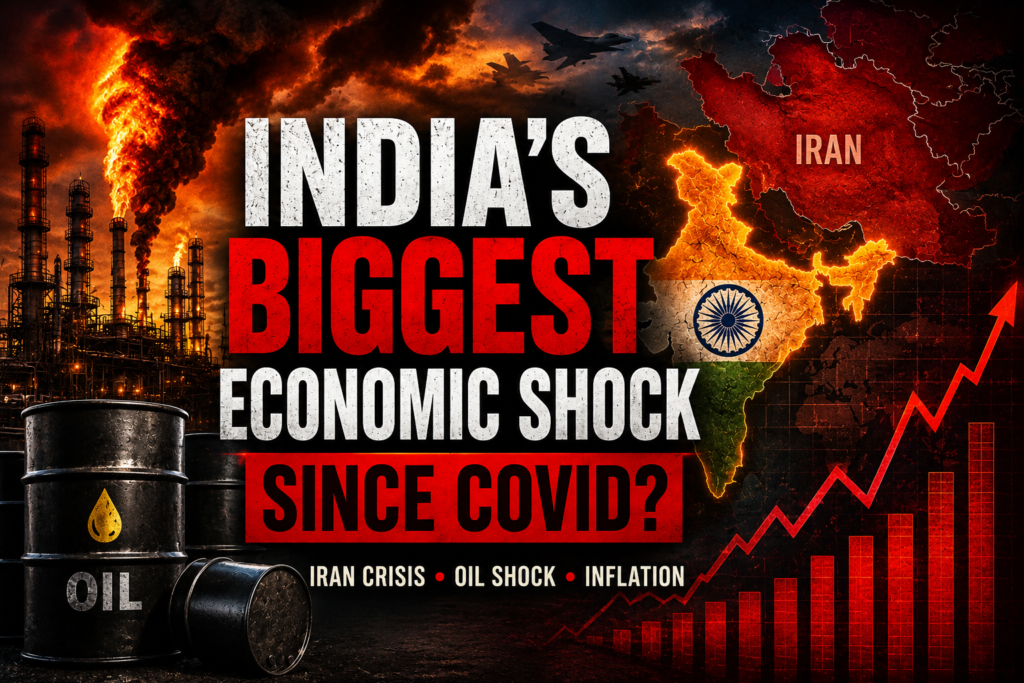
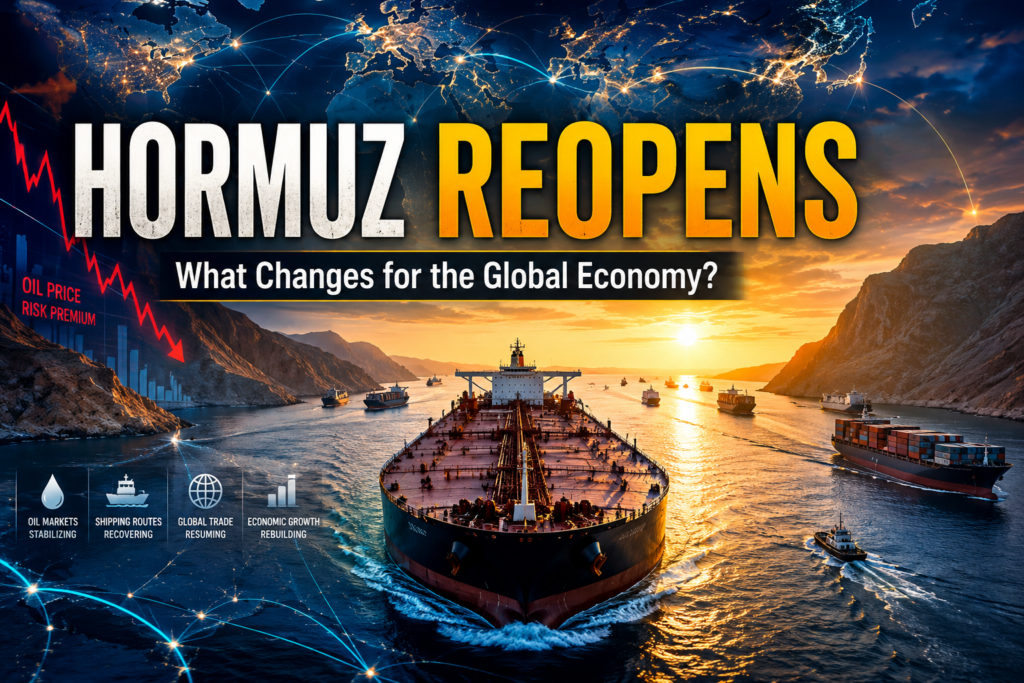
For months, the Strait of Hormuz sat at the center of one of the world’s most closely watched economic risks.
Oil traders tracked every development. Shipping executives held contingency meetings. Governments monitored energy markets with unusual intensity. A waterway narrow enough to fit comfortably on many digital maps was suddenly influencing fuel prices, shipping decisions, and inflation expectations across continents.
Now the situation is beginning to change.
The Strait of Hormuz is gradually reopening after a period of disruption. Oil prices have eased from their most anxious levels. More vessels are returning to established routes. Immediate fears of a major supply interruption have receded.
Yet economic disruptions have a habit of lingering after the disruption itself is gone.
When normal conditions return, businesses finally get the opportunity to measure what happened. Delayed shipments can be quantified. Emergency spending can be reviewed. Procurement decisions that felt sensible under pressure can be reassessed. In some cases, the reopening is the point at which executives begin calculating the true cost of uncertainty.
That process tends to receive far less attention than the crisis itself.
Why the Strait of Hormuz Matters So Much
The Strait of Hormuz is one of the most important maritime chokepoints in the global economy.
At its narrowest point, it spans only a few dozen kilometers. Through that passage moves a substantial share of globally traded oil along with large volumes of liquefied natural gas.
For countries such as India, China, Japan, and South Korea, Hormuz is not simply a shipping route. It sits quietly behind fuel prices, industrial production, transportation costs, and inflation trends.
India is a useful example. As one of the world’s largest energy importers, it remains heavily exposed to disruptions affecting Gulf shipping routes. A period of instability in Hormuz can quickly become a discussion about import costs, inflation pressures, fiscal planning, and currency stability.
Businesses have encountered versions of this vulnerability before. The pandemic exposed weaknesses in global supply chains. The Suez Canal blockage demonstrated how much trade could depend on a single route. More recently, disruptions in the Red Sea reminded companies that logistical assumptions can change quickly.
What stands out is not that these events occurred.
It is how frequently they seem to be occurring.
What Actually Happened During the Crisis
Military developments attracted most of the headlines.
The economic consequences were often more immediate.
As tensions increased, shipping companies faced growing uncertainty. At the height of concern, some insurers demanded sharply higher premiums for Gulf voyages. Operators introduced additional security measures. Freight rates climbed as risk became part of the price.
Some vessels delayed departures. Others adjusted routes. Importers reviewed inventory strategies. Exporters revisited logistics plans.
Trade continued.
But it became less predictable.
Financial markets and supply chains respond to uncertainty in very different ways. Traders can reprice risk within minutes. A rumor, statement, or incident can move prices before any physical disruption occurs. Supply chains move more slowly. Contracts must be renegotiated. Inventories have to be managed. Production schedules cannot be rewritten overnight.
One reason commodity markets often appear volatile during geopolitical crises is that they are responding not only to what has happened, but also to what might happen.
Actual shortages are frequently less dramatic than the fears that precede them.
The First Winner: Energy Markets
The most immediate beneficiary of reopening is the energy market.
During periods of tension, oil prices tend to include a geopolitical risk premium. As confidence gradually returns, part of that premium begins to fade.
The same dynamic applies to LNG markets. Buyers gain confidence in future deliveries. Importers become less concerned about sudden shortages. Energy-intensive industries face fewer planning challenges.
Energy costs influence far more than energy companies. Transportation firms, airlines, manufacturers, logistics operators, chemical producers, and consumers all feel the effects in different ways.
Reopening Hormuz removes one source of pressure.
It does not automatically restore confidence at the same pace.
Why Shipping May Be the Real Story
The most interesting economic consequences may not be found in oil markets at all.
They may be found in shipping behavior.
One lesson from the past several years is that companies rarely experience a disruption, spend months adapting to it, and then return completely to previous arrangements. Once alternative suppliers are identified, backup routes are tested, and contingency plans receive funding, some of those changes tend to survive.
What makes this particularly interesting is that major disruptions often change how organizations think about risk.
Costs that once looked unnecessary begin to look prudent.
Investments that seemed inefficient begin to look strategic.
A few years ago, maintaining additional inventory or developing alternative suppliers might have been viewed primarily as an added expense. After repeated disruptions, the same decisions can be framed as insurance. The underlying numbers may not have changed much. The perception of risk has.
And perception matters.
In many organizations, decisions about resilience are ultimately made by people who have recently lived through a disruption. Memories influence budgets more than most strategic frameworks are willing to admit.
Some executives will probably spend more time discussing supply-chain resilience over the next year than they did during the previous decade.
That may sound like an exaggeration. It probably isn’t.
There is another irony here. Reopening itself may strengthen the case for diversification. During the crisis, companies focus on immediate operational problems. Once conditions stabilize, they have the time and information needed to evaluate what went wrong. Vulnerabilities that were tolerated before suddenly appear harder to justify.
Inside boardrooms, the discussion has already started shifting.
Not whether Hormuz will remain open next month.
How much concentration risk is acceptable in the first place.
The Hidden Impact on Food and Fertilizer Markets
Most public attention focused on oil.
Many agricultural businesses were paying closer attention to fertilizer.
The Gulf region plays an important role in global fertilizer production and exports. When supply chains become disrupted, fertilizer markets can experience price pressure that eventually spreads through agricultural systems.
The effects arrive slowly.
A fertilizer shock rarely appears in supermarket prices immediately. It first shows up in decisions made by farmers months earlier—how much acreage to plant, which crops to prioritize, whether to reduce fertilizer application rates, and how much risk to assume heading into a growing season.
Those decisions are often made quietly and far from financial markets.
Their consequences emerge much later.
By the time consumers notice higher food prices, the original shipping disruption may already feel distant.
Why Emerging Economies Still Face Risks
For emerging economies, volatility can be as damaging as high prices.
The first effects of an energy shock are usually obvious. Import bills rise. Fuel becomes more expensive.
The secondary effects tend to be harder to manage.
Pressure builds on currencies. Financing conditions tighten. Inflation expectations become less predictable. Businesses postpone investment decisions while waiting for greater clarity.
Countries such as India, Bangladesh, Pakistan, Sri Lanka, and Egypt have all faced versions of this challenge during periods of energy-market instability.
Markets can adapt to expensive energy.
Adapting to uncertainty is often harder.
Could India Be One of the Biggest Beneficiaries?
Few major economies stand to gain more from stability in Hormuz than India.
Lower energy prices reduce pressure on imports. More predictable shipping conditions help manufacturers plan production and procurement more effectively. Inflation risks become easier to manage.
Those benefits are meaningful.
Yet India remains connected to a global economy that has become increasingly sensitive to geopolitical shocks. If businesses elsewhere remain cautious, lower energy costs alone may not generate the growth impulse some expect.
The opportunity is real.
The Bigger Lesson: Dependence on a Single Chokepoint
Every major disruption reveals something markets had gradually stopped paying attention to.
Hormuz has once again highlighted how much global trade depends on a small number of strategic corridors. Governments are discussing resilience. Investors are paying closer attention to geopolitical exposure. Companies are reassessing sourcing strategies and logistics networks.
Ironically, many of the efficiencies created by globalization also created dependencies.
The Suez Canal blockage offered one reminder. Pandemic-era bottlenecks offered another. The Red Sea disruptions reinforced the same lesson.
Efficiency reduces costs.
Resilience reduces vulnerability.
The challenge is that resilience rarely appears as a profit center. Companies notice the value of backup suppliers when something goes wrong, not when everything works normally. That makes resilience difficult to defend during calm periods and surprisingly easy to justify after a disruption.
Perhaps that is one reason attitudes appear to be shifting.
Projects such as alternative trade corridors, strategic reserves, regional manufacturing initiatives, and supply-chain diversification efforts are often discussed as infrastructure or industrial policy stories. They are also stories about memory. Policymakers and executives are responding not only to forecasts about future risks but to experiences they have already lived through.
What Happens Next?
Several paths remain possible.
Scenario 1: Gradual Normalization
Shipping activity continues recovering. Energy markets stabilize. Insurance costs ease. Confidence gradually returns.
The economic damage remains manageable, although some effects could linger.
Scenario 2: Renewed Tensions
Geopolitical hotspots rarely disappear permanently.
If tensions return, markets could once again begin pricing disruption risk long before physical trade flows are affected.
Scenario 3: Permanent Diversification
Countries and corporations may conclude that dependence on a single chokepoint carries more risk than previously assumed.
Investment in alternative corridors, strategic reserves, regional manufacturing capacity, and diversified supply chains could gradually reshape trade patterns over the coming decade.
Some of those changes may already be underway.
The Story Does Not End With Reopening
The reopening of the Strait of Hormuz brings welcome relief. Oil prices have stabilized. Shipping traffic is recovering. Immediate fears of a major supply shock have eased.
But the most important part of the story was never whether ships could pass through a narrow stretch of water.
The disruption exposed vulnerabilities that governments, investors, and businesses were already beginning to worry about. It highlighted how quickly regional instability can influence global prices, corporate decision-making, and long-term investment plans.
For a long time, many of these risks existed mostly as scenarios discussed in strategy documents and conference panels. Repeated disruptions have made them more tangible.
The reassessment is likely to continue long after attention shifts elsewhere.